News

New year, new tracking pipeline

New year, new tracking pipeline

Obviously, we’re some time into the year already, but back in November, I got invited by PloS bio to review this paper on a new tracking method called BehaveAI.

My dear reader. I was not prepared for how much this paper would change my life. When I read the abstract I said to myself, “Well that’s impossible. What they’re promising is impossible.” but they fully delivered. This is maybe the most beautiful piece of tracking tech I have ever seen, it immediately solved a massive problem for us in the lab, and before the paper was even published I had completely rebuilt our tracking pipeline to implement it.

Continue Reading
mobileSrc documentation is live!

mobileSrc documentation is live!

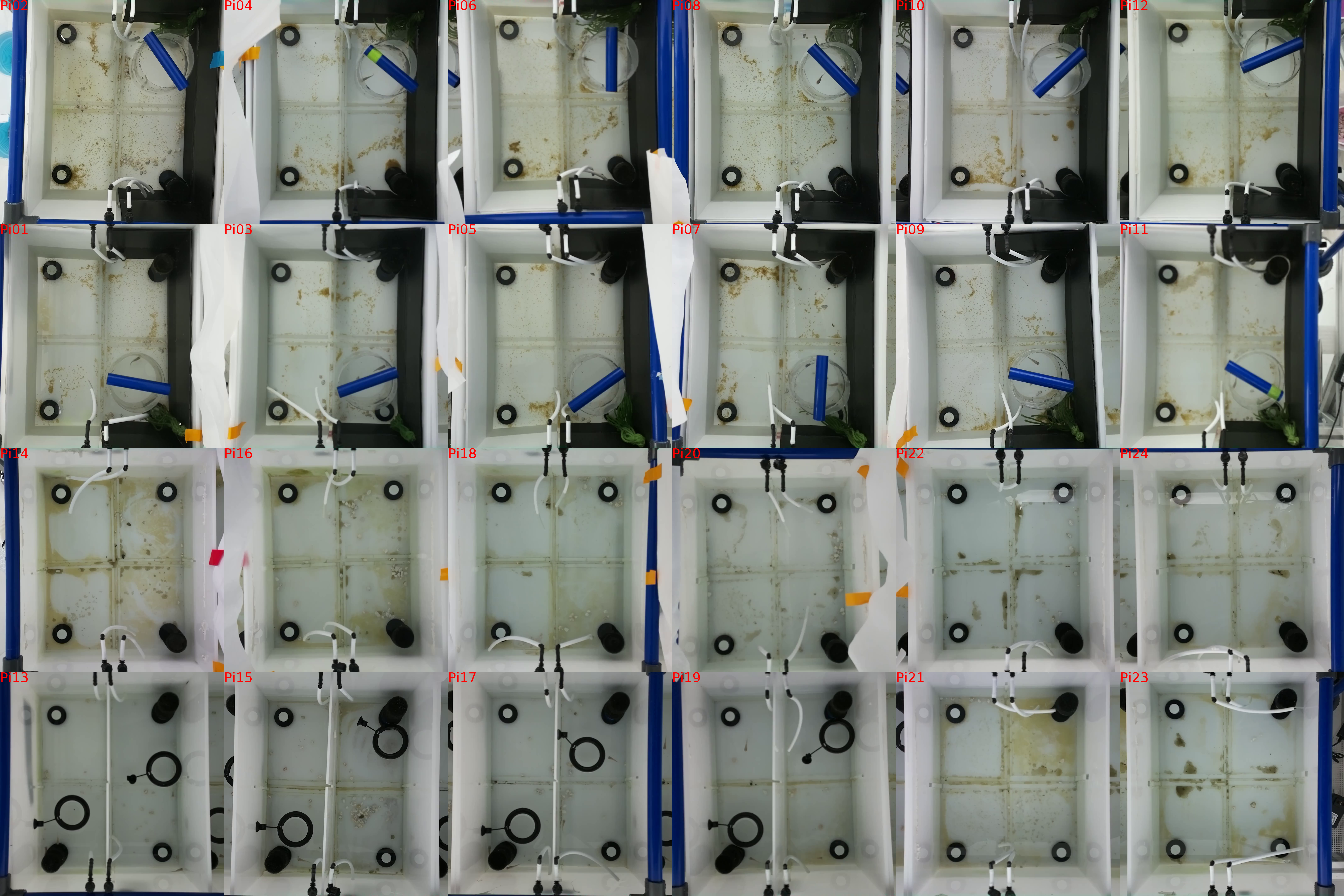
We always get asked how we a) track our videos and b) record our fish. In a future post I’ll outline our main tracking pipelines, but I’m excited to share that our recording pipeline is fully documented and available on github! This includes all of the raspberry pi code that keeps things running smoothly, as well as the code for a supervisor computer that checks for errors and processes videos each night. Some of this will certainly need to be adapted for your specific system (based on your storage situation), but this is a fairly robust toolbox for recording, and it comes with complementary fish jokes.

Continue Reading
First Annual CV4Bio Trackathon!

First Annual CV4Bio Trackathon!

About 2 years ago, I pitched a Computer Vision workshop for biologists as part of a fellowship. I ended up getting an NSF fellowship instead, but that workshop has been bouncing around in my head for the last couple years. Finally I decided to organize it properly, started making plans, emailing participants, organized funding, and to my surprise, it actually happened, this past weekend!

Continue Reading
It's only a model.

It's only a model.

About 2 years ago, I was home sick with Covid wondering how to spend my time while I waited to get back into the lab. We had some experiments slated, which we had proposed for my NSF fellowship in which we had proposed the idea that Bayesian updating was responsible for the winner/effects. We had pitched it as a simple conceptual model, but since I had a few days at home, I thought I could code it up as a proper agent-based simulation, to see if our intuitions were correct. 10 days later, I had a solid simulation with some cool preliminary results. Let’s write it up as a paper, we said. It will be fun, we said.

Continue Reading